
Most families don’t realize how much trouble a vague nanny agreement can cause until they’re already in it. A missed overtime policy, an undefined sick day rule, or no termination clause can turn a great working relationship into a stressful dispute fast. This nanny contract terms guide walks you through every clause that matters, from compensation and taxes to confidentiality and performance reviews, so you can build a clear, compliant employment agreement before your nanny’s first day on the job.
Table of Contents
- Key takeaways
- What every nanny contract terms guide should cover
- How to draft a nanny contract tailored to your family
- Common mistakes that undermine your nanny contract
- Executing and maintaining your nanny contract
- My take on why contracts are the foundation of trust
- How Inhomecaresolutionsco makes this easier for families
- FAQ
Key takeaways
| Point | Details |
|---|---|
| Cover all core clauses | A solid nanny employment agreement must address pay, schedule, benefits, taxes, and termination to protect both parties. |
| Customize to your state’s laws | Nanny contracts are legally binding and must comply with local labor laws, including overtime and minimum wage rules. |
| Include tax obligations upfront | Parents who hire nannies become household employers responsible for withholding Social Security, Medicare, and unemployment taxes. |
| Schedule regular contract reviews | Build in performance review dates and raise eligibility to prevent awkward compensation conversations later. |
| Don’t skip confidentiality clauses | Social media rules and household privacy policies set boundaries that protect your family and your nanny’s working relationship. |
What every nanny contract terms guide should cover
A nanny contract is not just a formality. It is a legally binding document that defines the working relationship, protects both you and your nanny, and keeps your household running without confusion. Nanny contracts must comply with state and local labor laws, which means a generic template you found online may not cut it for your situation.
Here are the nanny contract must-have clauses you should include in every agreement:
Contact information and household details. List the full legal names and addresses of both the employer and the nanny. Include the names and ages of the children in care. This grounds the contract in specifics from the start.
Job responsibilities. Spell out every duty in plain language. Childcare tasks like meal preparation, school pickup, and bedtime routines should all be listed. If you expect light housekeeping or laundry, write it in. Vague language like “general household help” will cause problems.
Work schedule and hours. Define start and end times, days of the week, and any flexibility expectations. Well-defined work schedules reduce conflicts by removing guesswork around overtime, holiday work, and schedule change notifications.
Compensation and payment terms. State the base hourly or weekly rate, overtime pay (federal law requires time-and-a-half after 40 hours), and the payment schedule. Specify whether you pay by check, direct deposit, or another method.
Benefits and paid time off. Include vacation days, sick leave, paid holidays, and any additional benefits like mileage reimbursement or health insurance contributions. Leaving this section blank is one of the most common mistakes families make.
Tax and legal obligations. As a household employer, you are required to withhold and pay Social Security and Medicare taxes. Household employers must pay unemployment taxes and maintain formal payroll records. This belongs in the contract, not in a separate conversation.
Termination clause. Outline the notice period required from both sides, grounds for immediate dismissal, and any severance terms. At-will employment laws vary by state, so check your local rules before finalizing this section.
Confidentiality and household policies. A non-disclosure agreement protects your family’s privacy. Including NDA and house rules helps manage expectations around social media posts, sharing family information, and household norms like screen time or guest policies.
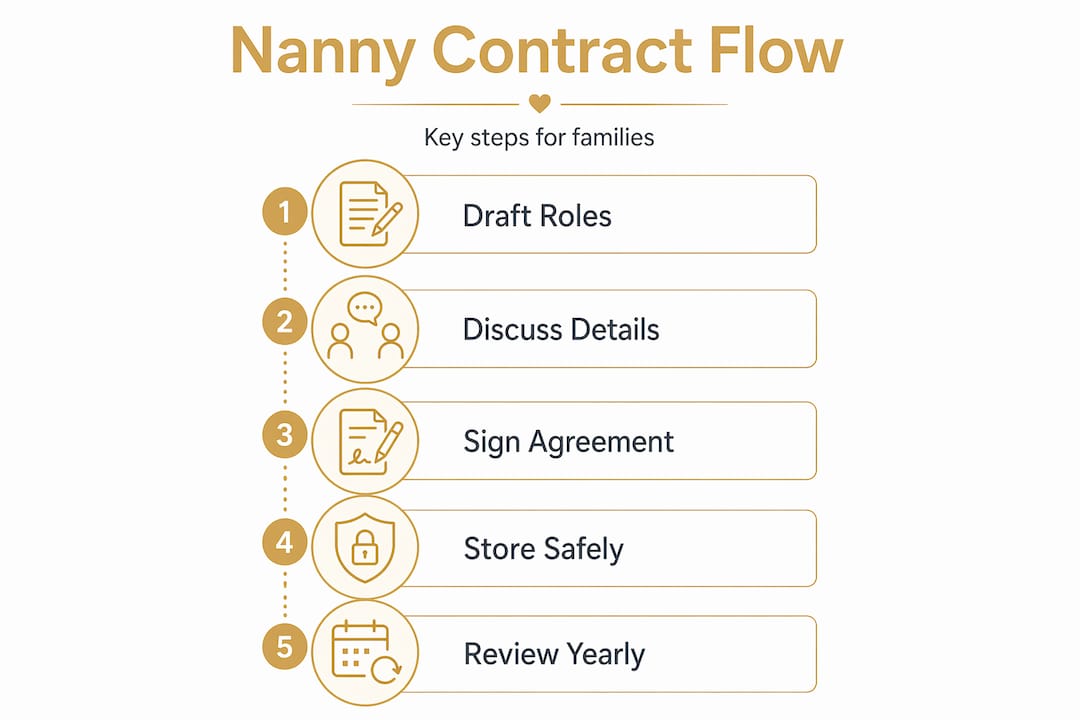
Contract amendments and review schedules. State how and when the contract can be updated. Build in an annual review date so both parties know when to revisit terms.
Pro Tip: Don’t write your job description section in a rush. Sit down and map out a full week in your household. Every task you expect your nanny to handle should appear somewhere in that section.
How to draft a nanny contract tailored to your family
Knowing what to include is only half the job. Actually writing a nanny contract that fits your family’s specific situation takes a few more deliberate steps.
Start with a solid template. A reputable template gives you the structure you need without starting from scratch. Just remember that templates are starting points and cannot override your state’s mandatory legal requirements.
Be specific about duties. Replace every vague phrase with a concrete one. Instead of “help with the kids,” write “prepare breakfast and lunch for two children ages 4 and 7, assist with homework from 3:30 to 5:00 p.m., and manage bath and bedtime routine by 8:00 p.m.”
Adjust for your nanny type. A live-in nanny agreement looks very different from a part-time arrangement. Live-in contracts need to address housing terms, private space rules, and on-call expectations. Part-time contracts need clear boundaries around hours to prevent scope creep. Before you draft anything, it helps to understand the differences between childcare options so you know exactly what kind of agreement you need.
Incorporate state and local labor law requirements. Minimum wage, overtime thresholds, and paid sick leave laws differ by state. Research your state’s household employer rules or consult a payroll professional before signing anything.
Add a trial period clause. A 30 to 90 day trial period with defined evaluation criteria gives both parties an exit ramp if the fit isn’t right. It also sets a natural first checkpoint for feedback.
Include provisions for unique family needs. If your nanny will travel with your family, drive your children, or manage a child with special medical needs, those responsibilities need their own clauses with appropriate compensation and liability considerations.
Pro Tip: After you draft the contract, read it out loud. If any sentence sounds confusing to you, it will definitely confuse your nanny. Clarity is the goal, not legal-sounding language.
Common mistakes that undermine your nanny contract
Even well-intentioned families make errors when finalizing nanny contract terms. These are the ones that cause the most damage.

Vague job descriptions. When duties aren’t spelled out, expectations drift. Your nanny assumes her job ends at childcare. You assume she’ll also handle the dishes and school forms. Neither assumption is wrong. The contract just never addressed it.
Skipping tax obligations. Many parents underestimate that hiring a nanny creates tax liability for them as household employers. Ignoring this in the contract doesn’t make it go away. It just means you’ll face penalties and back taxes later.
Leaving paid time off undefined. If your contract says nothing about sick days or vacation, you’ll have an awkward conversation every time your nanny calls in sick or asks for a week off. Define the policy clearly so both of you know where you stand.
No termination process. Firing a nanny without a clear termination clause can expose you to legal risk, especially if your state has specific rules around notice periods or severance. A clear process protects you both.
Missing confidentiality and social media rules. Without written boundaries, your nanny may post photos of your children or share details about your household online without any bad intent. A confidentiality clause removes the ambiguity before it becomes a problem.
No performance review policy. Formal review schedules prevent awkward ad-hoc compensation discussions and set a predictable timeline for raises. Without one, your nanny has no idea when or how to expect a pay increase, which quietly builds resentment.
Executing and maintaining your nanny contract
Getting the contract signed is the beginning, not the finish line. Here is how to put it into practice and keep it working over time.
Talk through the contract before signing. Don’t hand your nanny a document and ask her to sign it on the spot. Walk through each section together. Answer questions. This conversation builds trust and catches misunderstandings before they become disputes.
Keep signed copies on file. Both you and your nanny should have a signed copy. Store yours somewhere secure, either digitally or in a physical file. You may need it if a disagreement arises.
| Action | Timing | Why it matters |
|---|---|---|
| Initial contract review with nanny | Before start date | Builds mutual understanding and catches gaps |
| First performance review | 30 to 90 days in | Evaluates trial period and adjusts expectations |
| Annual contract review | Every 12 months | Updates pay, duties, and terms as family needs change |
| Payroll tax filings | Quarterly and annually | Keeps you compliant as a household employer |
Plan for regular updates. Your family will change. A new baby, a move, or a schedule shift all affect the contract. Build in an annual review date so updates happen proactively, not reactively.
Handle payroll correctly from day one. Professional payroll services for household employers manage complex tax compliance requirements that most parents aren’t equipped to handle alone. Some services charge setup fees and require annual commitments, so compare options before you commit. Being transparent about tax duties upfront also helps maintain a positive working relationship with your nanny.
Pro Tip: Set a recurring calendar reminder for your annual contract review. It takes 30 minutes and prevents a year’s worth of unspoken frustration from building up on both sides.
My take on why contracts are the foundation of trust
I’ve worked with enough families to know that most of them skip the thorough contract conversation because it feels awkward. Hiring someone to care for your children is deeply personal, and pulling out a legal document can feel like you’re starting the relationship with suspicion rather than warmth.
But here’s what I’ve actually seen play out. The families who invest time in a detailed nanny employment agreement almost always have the smoothest, longest-lasting working relationships. The contract isn’t a sign of distrust. It’s a sign of respect. It tells your nanny exactly what you expect, what she’ll earn, and what her rights are. That clarity is a gift, not a burden.
What I’ve also learned is that the legal and tax side catches parents completely off guard. Most first-time household employers don’t realize they’re on the hook for payroll taxes until they’re already behind. That’s a stressful and expensive surprise that a good nanny contract terms guide, combined with honest upfront conversations, can prevent entirely.
My advice: treat the contract as the foundation of the relationship, not a box to check. The time you put in before day one pays off every single day after it.
— Mara
How Inhomecaresolutionsco makes this easier for families
Drafting a compliant nanny contract while managing payroll, taxes, and a household is a lot to take on alone. The hidden costs of going it alone add up quickly when you factor in legal missteps and compliance gaps.

Inhomecaresolutionsco is a premier nanny placement agency in Ohio that does more than match families with qualified caregivers. The team helps families navigate the full employment process, including contract guidance, payroll support, and tax compliance. With a 98% retention rate and a rigorous vetting process that presents only the top 5% of candidates, Inhomecaresolutionsco takes the guesswork out of hiring. If you’re ready to find a nanny and get the agreement right from the start, explore professional nanny placement services built specifically for families like yours.
FAQ
What should a nanny contract always include?
A nanny contract should always include job duties, work schedule, compensation, paid time off, tax obligations, a termination clause, and confidentiality policies. These nanny contract essentials protect both the employer and the nanny from misunderstandings.
Are nanny contracts legally binding?
Yes, nanny contracts are legally binding agreements and must comply with state and local labor laws, including overtime and minimum wage requirements. Templates are a useful starting point but cannot override mandatory legal protections.
Do parents have to pay taxes when hiring a nanny?
Yes. Hiring a nanny makes you a household employer, which means you are responsible for withholding and paying Social Security, Medicare, and unemployment taxes. Ignoring this obligation can result in penalties and back taxes.
How often should a nanny contract be updated?
A nanny contract should be reviewed at least once a year or whenever significant changes occur, such as a new baby, a schedule change, or a pay increase. Building an annual review date into the original contract makes this process automatic.
What is a trial period clause in a nanny contract?
A trial period clause sets a defined window, typically 30 to 90 days, during which both parties evaluate the working relationship before committing fully. It provides a structured first checkpoint for feedback and adjustment.
Recommended
- How to Interview a Nanny: A Step-by-Step Guide for Parents – inhomecaresolutionsco.com
- Nanny vs. Au Pair: Key Differences for Families Seeking Childcare – inhomecaresolutionsco.com
- How to Prepare Your Child (and Yourself) for a New Nanny – inhomecaresolutionsco.com
- What Is a Full-Time Nanny? A Guide for Parents