Short answer
Sensory play at home is play that lets children explore through touch, sight, sound, smell, and movement: scooping dry pasta, squishing play dough, splashing in a water bin, or sorting smooth stones. It does not need fancy equipment, a dedicated playroom, or a long setup. Your nanny can build a good activity in ten minutes from things already in your kitchen. The best activities match the child’s age, keep the mess contained, and end with a simple cleanup children can help with. Start with one bin, one material, and a few tools, and rotate the material every week or two so play stays fresh.
Why sensory play is worth a regular spot in the day
Children learn a great deal through their hands. Scooping and pouring build hand strength and coordination. Sorting objects by color, size, or texture builds early thinking skills. Pretend play with a sensory bin, turning dry beans into a farm or a construction site, builds language as children describe what they are doing. Sensory play also gives busy children a calm, focused outlet, which is useful on days when Cleveland weather keeps everyone inside.
For a nanny, sensory play is practical too: it can fill a morning block, work for siblings of different ages, and be set up and cleaned up within one routine. The most useful materials are ordinary: dried pasta, rice, oats, water, ice, play dough, fabric scraps, and kitchen tools such as scoops, cups, and spoons.
Set it up so it actually works
A sensory activity usually fails for one reason: the setup is bigger than the cleanup plan. A few ground rules keep it sustainable.
First, contain it: one shallow bin, a tray with raised edges, or a towel under the bin. Second, pick materials that fit the child. For a child who still mouths everything, use large, taste-safe items and stay close by; save small beads and dried beans for older children. Third, keep tools simple: a scoop, a cup, and a spoon beat a dozen novelty tools. Fourth, agree on cleanup in advance, and let children help scoop spills back into the bin and put tools away.
Parents and nannies should also agree on where sensory play happens and which materials are off limits, and a quick daily-log note on what worked helps the next day go better.
Babies and young toddlers: big, simple, and close by
For the youngest children, sensory play should be big, simple, and always supervised. The goal is exploration, not a finished product.
Try a fabric basket with cloths of different textures: a soft washcloth, a silky scarf, a nubby towel, and a crinkly piece of fabric. A shallow tray of water with floating cups and sponges works well on a towel, with the nanny sitting right beside the child. Cooked, cooled spaghetti in a tray is a classic taste-safe option for a toddler who still mouths everything, and it cleans up with a damp cloth. Keep sessions short; ten to fifteen minutes is plenty. When a young child starts throwing materials or losing interest, the activity is done. Put it away while it is still fun, and it will be welcomed again tomorrow.
Ages two and three: scooping, pouring, and pretend play
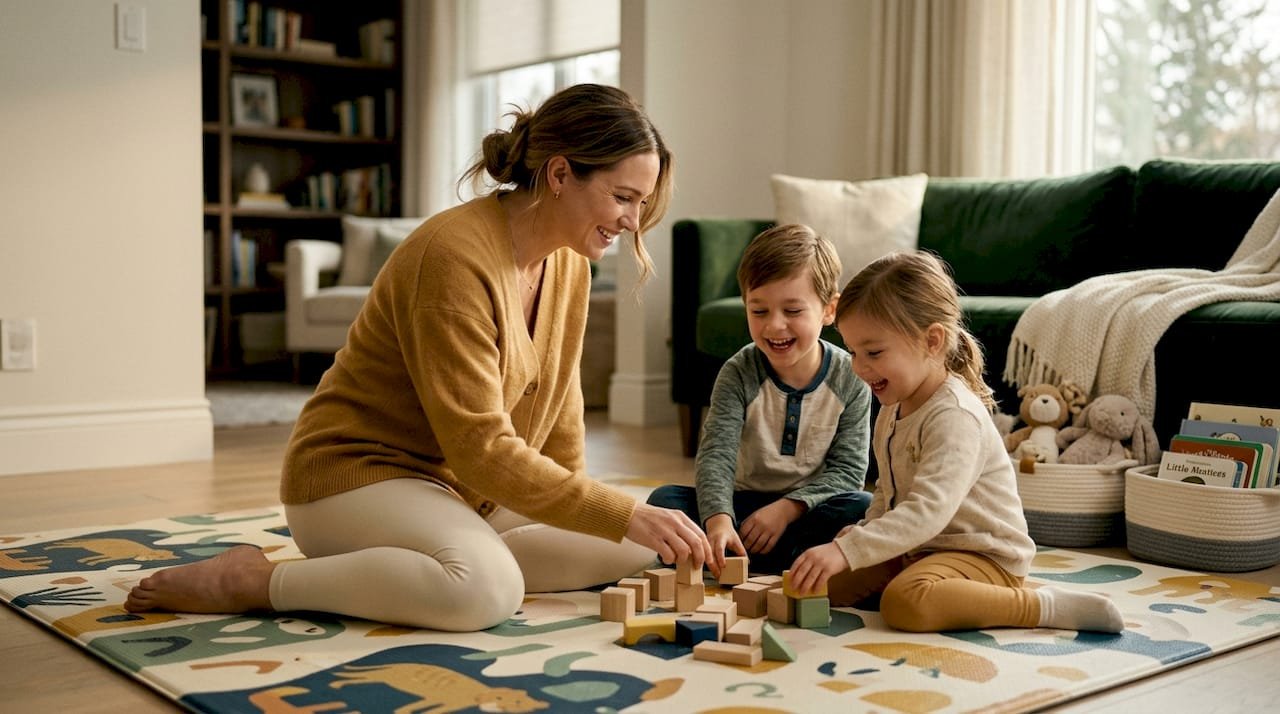
Two and three year olds are ready for a real sensory bin. Fill a shallow bin with dried pasta, oats, or rice, and add scoops, cups, small containers, and a few toy animals or trucks. Children this age love filling and dumping, burying objects and digging them out, and turning the bin into a pretend world. Add a theme to keep it fresh: farm animals in oats, trucks in dried pasta, or shells and scoops in a water bin on a warm day.
Play dough is another strong choice: one or two colors, a rolling pin, and cookie cutters. Ice play is simple and free: freeze small toys in water overnight, then let the child melt the ice with warm water and a spoon.
Ages four and five: sorting, measuring, and making
Preschoolers can handle more steps, which opens up richer sensory play. A sorting bin works well: dried beans or pasta in several colors, sorted with tongs or a large spoon into muffin tins or small bowls. Measuring and mixing is another favorite: let the child scoop, level, and pour into marked cups, and talk about more, less, full, and empty as they play.
Homemade play dough, mixed from flour, salt, water, and oil, is a good project in itself, and adding a scent such as vanilla or cinnamon makes it a smell-and-touch activity too. A nature tray, smooth stones, pinecones, leaves, and sticks collected from the yard, invites sorting, stacking, and building, and costs nothing. At this age, children can also help set up and clean up more independently: laying out the towel, choosing the tools, and scooping everything back into the bin at the end.
School-age children: projects with a purpose
School-age children still enjoy sensory play, but they like it with a project attached. Slime and dough recipes, with an adult nearby for measuring, give them a hands-on feel. A building bin with kinetic sand, small blocks, and toy figures lets them design and rebuild. Cooking together is sensory play in disguise: kneading dough, washing vegetables, stirring batter, and smelling herbs all involve touch, smell, and movement, and end with something the family can eat.
For an after-school nanny, a sensory activity is also a useful transition. A child who comes home wound up from school often settles faster with twenty minutes of hands-on play than with a screen right away. Keep the activity ready before pickup, or set it up together as the first after-school job, and the rest of the afternoon tends to run more smoothly.
Keeping the mess manageable
Mess is the reason many families quietly give up on sensory play, so plan for it directly. Choose one contained space, such as the kitchen floor or a table covered with an old shower curtain. Use materials that sweep or wipe up easily: dried pasta and oats sweep up in a minute, and water wipes up with a towel. Avoid glitter and fine sand on carpet.
Rotate, do not accumulate. Keep two or three bins’ worth of materials in one box, and swap the active bin every week or two. Store tools together so setup takes minutes, and build cleanup into the routine: a short song or a race to scoop up spills turns cleanup into part of the day.
Sensory play for Cleveland families, in every season
Cleveland weather shapes how families play, and sensory play adapts well to it. In winter, when snow and cold keep children inside in Beachwood, Shaker Heights, Hudson, and Chagrin Falls, an indoor bin, play dough, or baking project fills a long afternoon without a car trip. In spring and fall, a nature tray or a water bin on the porch works for families in Pepper Pike, Moreland Hills, Orange, and Bentleyville. In summer, water play outside is easiest of all, and families in Hunting Valley, Gates Mills, Waite Hill, Kirtland Hills, and Bratenahl can set it up in the yard with a towel nearby.
The same idea works across the east side because it does not depend on a venue or a ticket. A nanny in any of these communities can set up the same bin with the same kitchen supplies, adjust it for the child’s age, and move it outside when the weather clears.
How InHome Care Solutions can help
Sensory play sounds simple, and it is, but it works best with a nanny who knows how to match an activity to a child’s age and keep the mess and cleanup in balance. That judgment comes from experience, and it is what InHome Care Solutions looks for in every caregiver.
Every InHome nanny goes through a 12-step vetting process, including identity and background screening, a driving-record review, employment and reference verification, a social-media evaluation, and CPR and first-aid confirmation. Founder Mara personally oversees every match. Every placement also includes a two-day working trial and a 90-day replacement guarantee.
Professional nanny rates in the Cleveland area run $23 to $35 per hour. If you want a nanny who can fill your child’s days with thoughtful, age-appropriate play, InHome Care Solutions can help you find the right fit.
Book a free consultation today, or call 440-538-8227. You can also reach us at mkg@inhomecaresolutionsco.com or visit www.inhomecaresolutionsco.com to learn more.